
Letter to General Enoch H. Crowder from F.P. Hartigan - June 2, 1918
Transcript
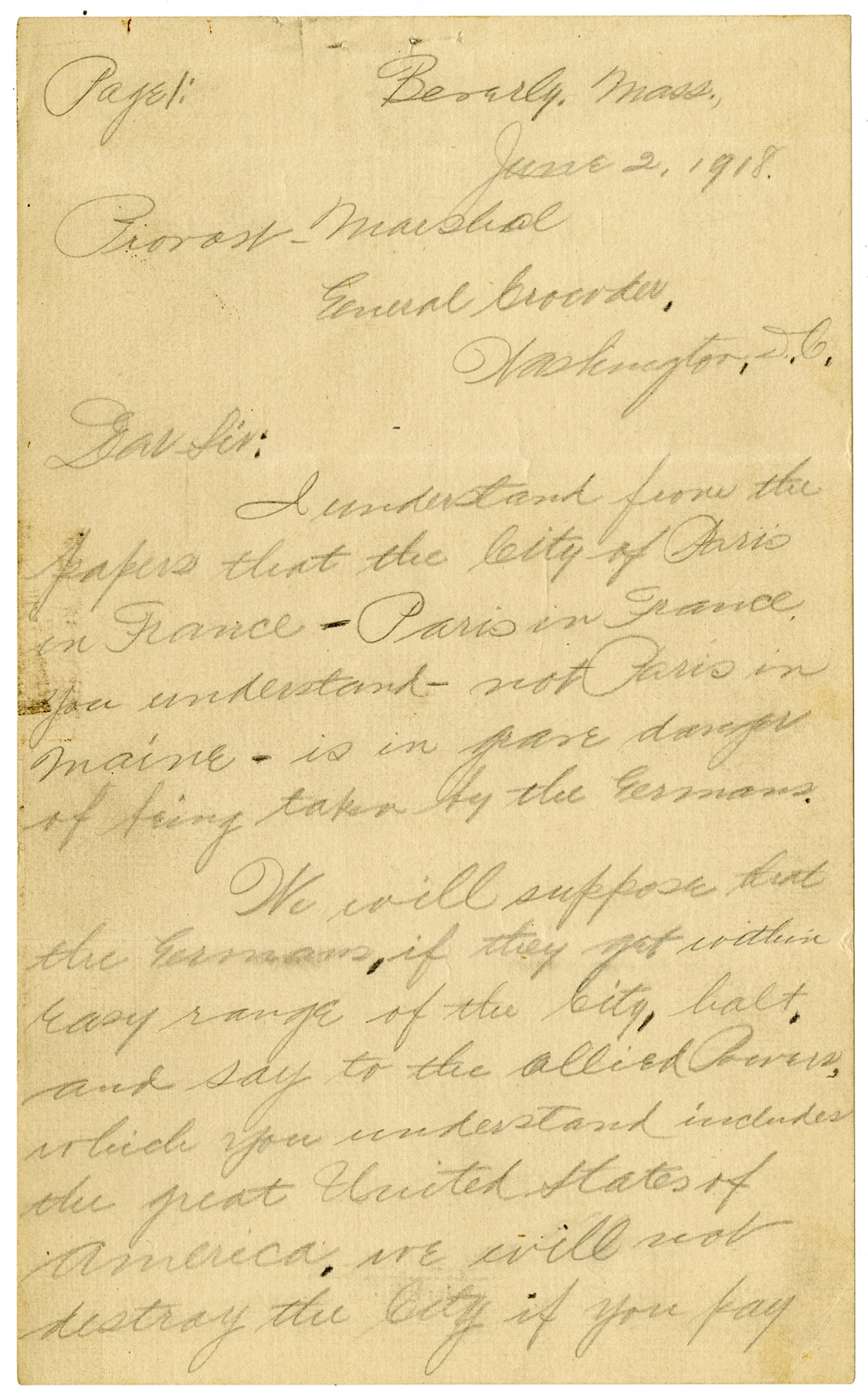
Page 1: Beverly [Massachusetts], June 2, 1918. Provost-Marshal General Crowder, Washington, D.C. Dear Sir: I understand from the papers that the City of Paris in France-Paris in France you understand-not Paris in Maine- is in grave danger of being taken by the Germans. We will suppose that the Germans, if they get within easy range of the City, halt, and say to the Allied Powers, which you understand includes the great United States if American, we will not destroy the City if you pay
Transcript
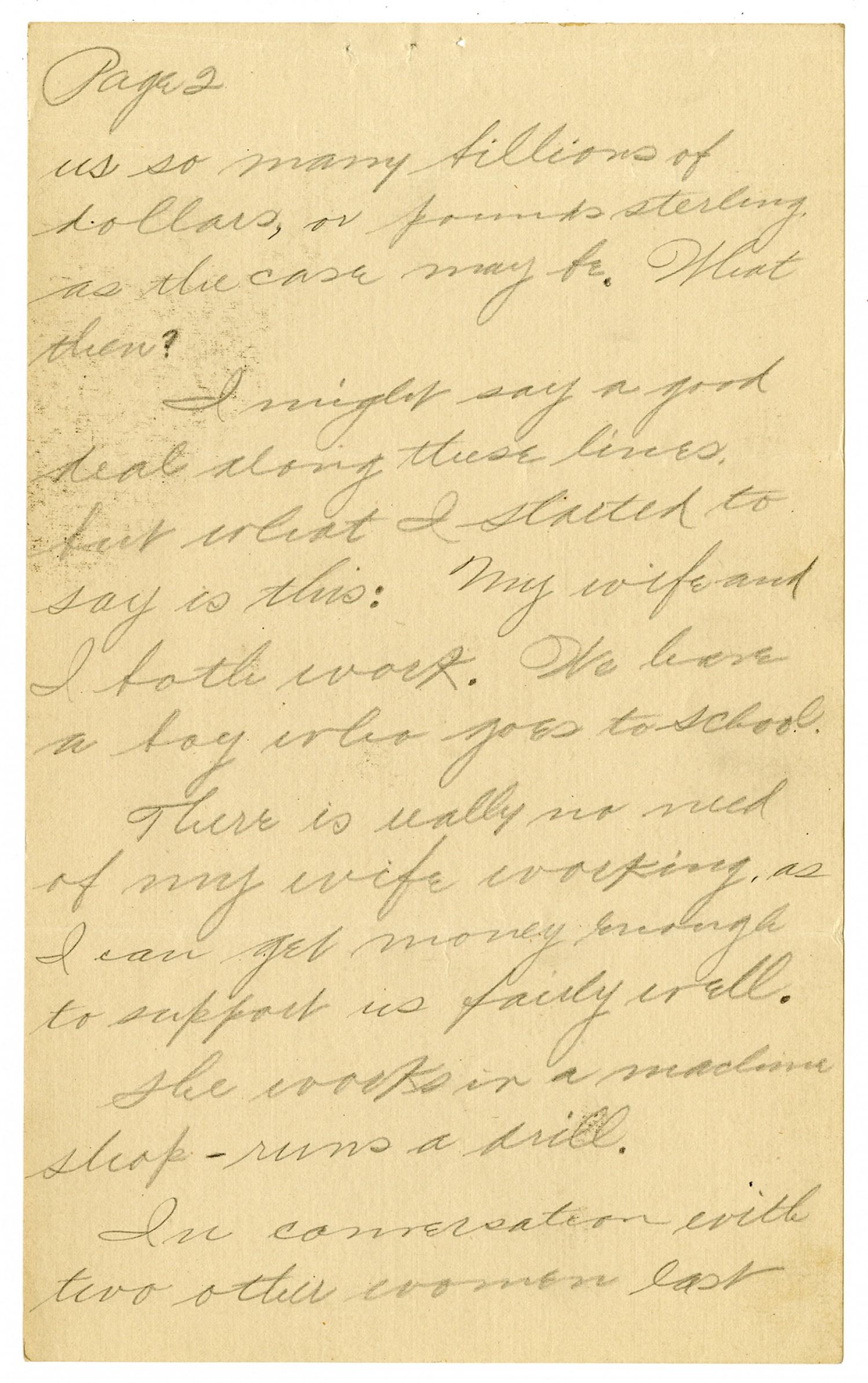
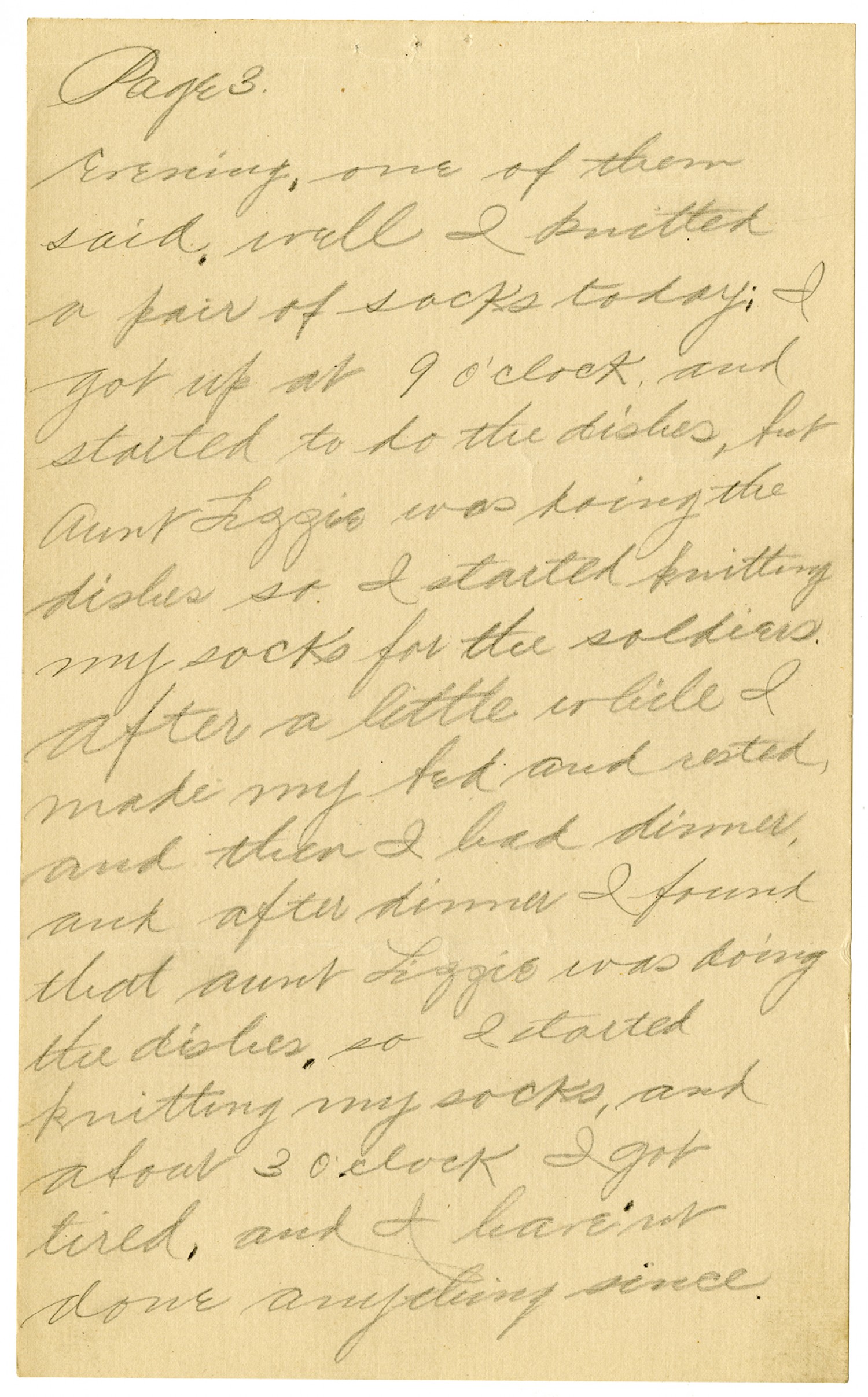
Page 2 us so many billions of dollars, or pounds sterling as the case may be. What then? I might say a good deal along these lines, but what I started to say is this: My wife and I both work. We have a boy who goes to school There is really no need of my wife working, as I can get money enough to support us fairly well. She works in a machine shop- runs a drill. In conversation with two other women last
Transcript
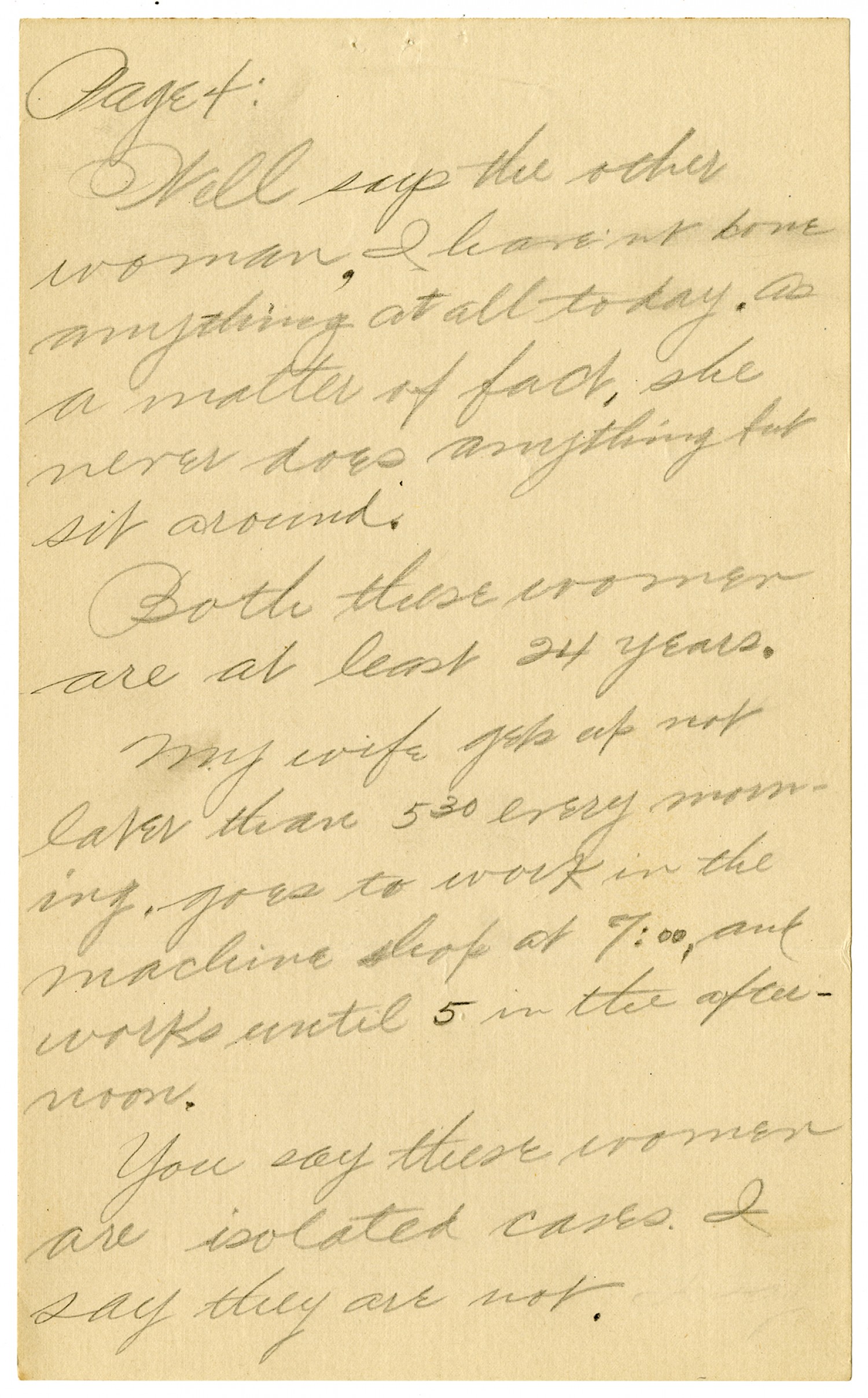
Page 3 evening, one of them said, well I knitted a pair of socks today; I got up at 9 o
Transcript
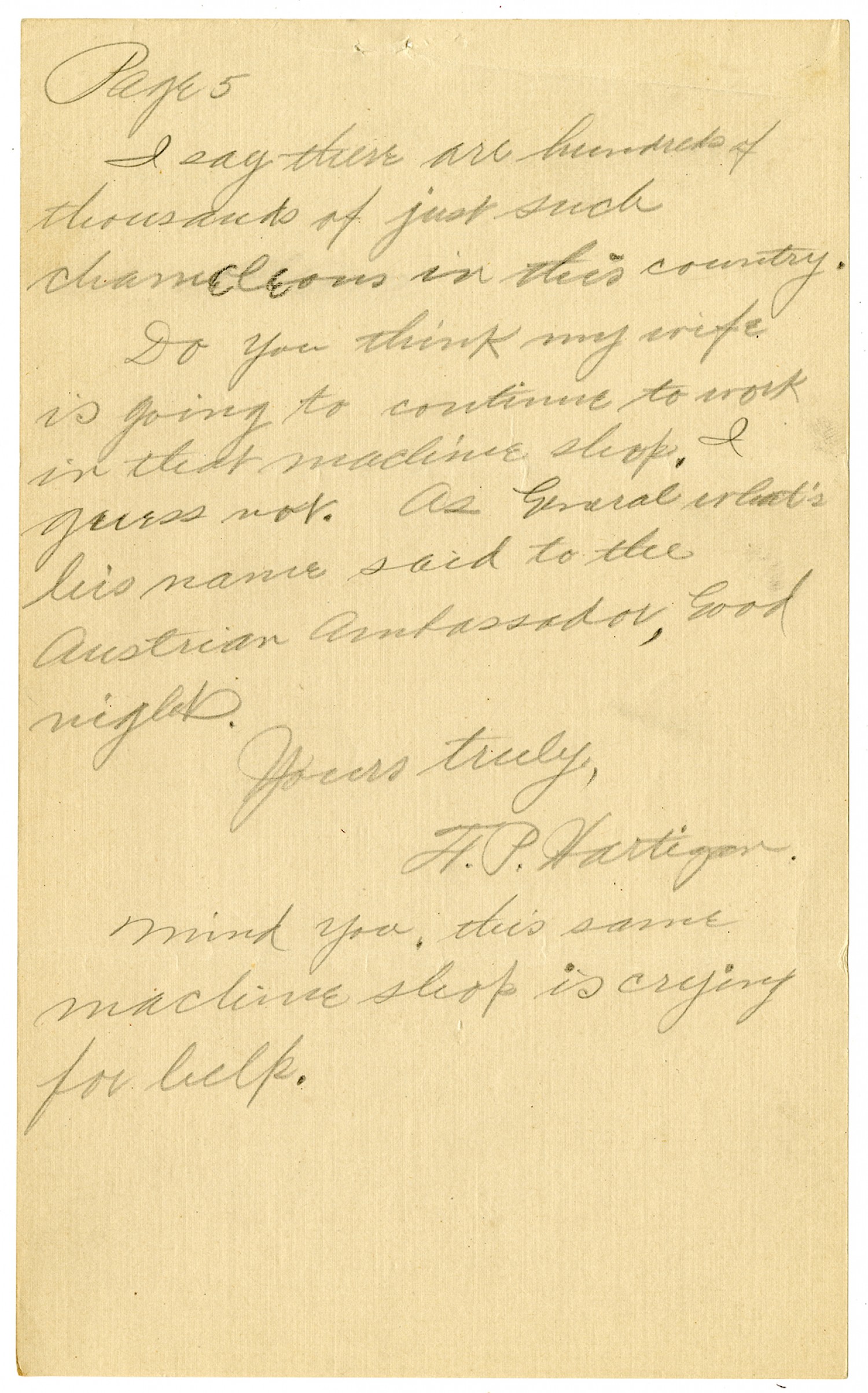
Page 4: Well says the other woman, I have not done anything at all today. As a matter of fact, she never does anything but sit around. Both these women are at least 24 years. My wife gets up not later than 530 every morning, goes to work in the machine shop at 7:00, and works until 5 in the afternoon. You say these women are isolated cases. I say they are not.
Transcript
Page 5 I say these are hundreds of thousands of just such chameleons in this country. Do you think my wife is going to continue to work in that machine shop. I guess not. As General what
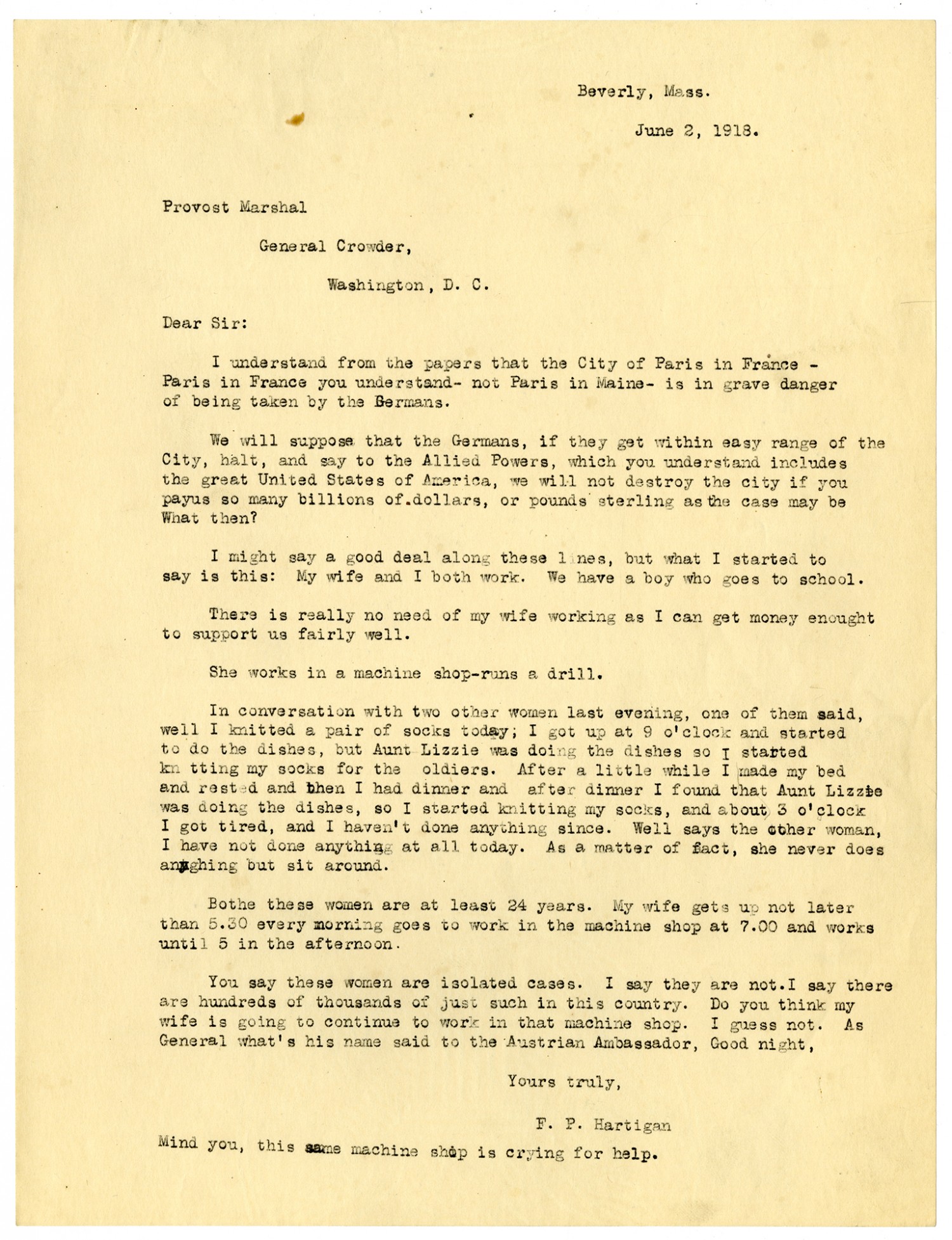
Transcript
Beverly, [Massachusetts] June 2, 1918. Provost Marshal General Crowder, Washington, D.C. Dear Sir: I understand from the papers that the City of Paris in France-Paris in France you understand-not Paris in Maine- is in grave danger of being taken by the Germans. We will suppose that the Germans, if they get within easy range of the City, halt, and say to the Allied Powers, which you understand includes the great United States if American, we will not destroy the City if you payus so many billions of dollars, or pounds sterling as the case may be. What then? I might say a good deal along these lines, but what I started to say is this: My wife and I both work. We have a boy who goes to school There is really no need of my wife working, as I can get money enought to support us fairly well. She works in a machine shop- runs a drill. In conversation with two other women last evening, one of them said, well I knitted a pair of socks today; I got up at 9 o
Details
| Title | Letter to General Enoch H. Crowder from F.P. Hartigan - June 2, 1918 |
| Creator | Hartigan, F.P. |
| Source | Hartigan, F.P. Letter to General Enoch H. 2 June 1918. Crowder, Enoch H. (1859-1932), Papers, 1884-1942. C1046. The State Historical Society of Missouri, Columbia, MO. |
| Description | In this letter to General Enoch H. Crowder, F.P. Hartigan told Crowder of his wife who worked in a machine shop and spoke poorly of women who did not do anything for the war effort. This document is part of a collection compiled by Enoch Herbert Crowder, the Edinburg, Grundy County, Missouri native who served as Judge Advocate General. Crowder devised the Selective Service Act in 1917 which drafted America's forces during World War I. |
| Subject LCSH | Crowder, E. H. (Enoch Herbert), 1859-1932; World War, 1914-1918--Women; World War, 1914-1918--Public opinion |
| Subject Local | WWI; World War I |
| Site Accession Number | C1046 |
| Contributing Institution | The State Historical Society of Missouri |
| Copy Request | Transmission or reproduction of items on these pages beyond that allowed by fair use requires the written permission of the State Historical Society of Missouri: 1020 Lowry Street, Columbia, Missouri, 65201-7298. (573) 882-7083. |
| Rights | The text and images contained in this collection are intended for research and educational use only. Duplication of any of these images for commercial use without express written consent is expressly prohibited. |
| Date Original | June 2, 1918 |
| Language | English |